Forklift & Pedestrian Safety: Improving Visibility Around Mobile Equipment

Rene Lightfoot • August 20, 2026

Share this article

Forklift & Pedestrian Safety: Improving Visibility Around Mobile Equipment

Warehouses and distribution centers often require forklifts and pedestrians to work within the same facility. Intersections, aisles, loading areas, blind corners, racks, equipment, and other obstructions can make maintaining awareness challenging for both operators and workers on foot.


OSHA recommends separating forklift traffic from pedestrians where possible and identifies pedestrian strikes as a potential hazard in workplaces using powered industrial trucks.


NIOSH likewise recommends evaluating blind corners and intersections and making efforts to alert workers when forklifts are nearby.

Visibility Is a Two-Way Challenge

Forklift safety isn't only about whether an operator can see a pedestrian.


Workers on foot also need to recognize when equipment is approaching or operating nearby.


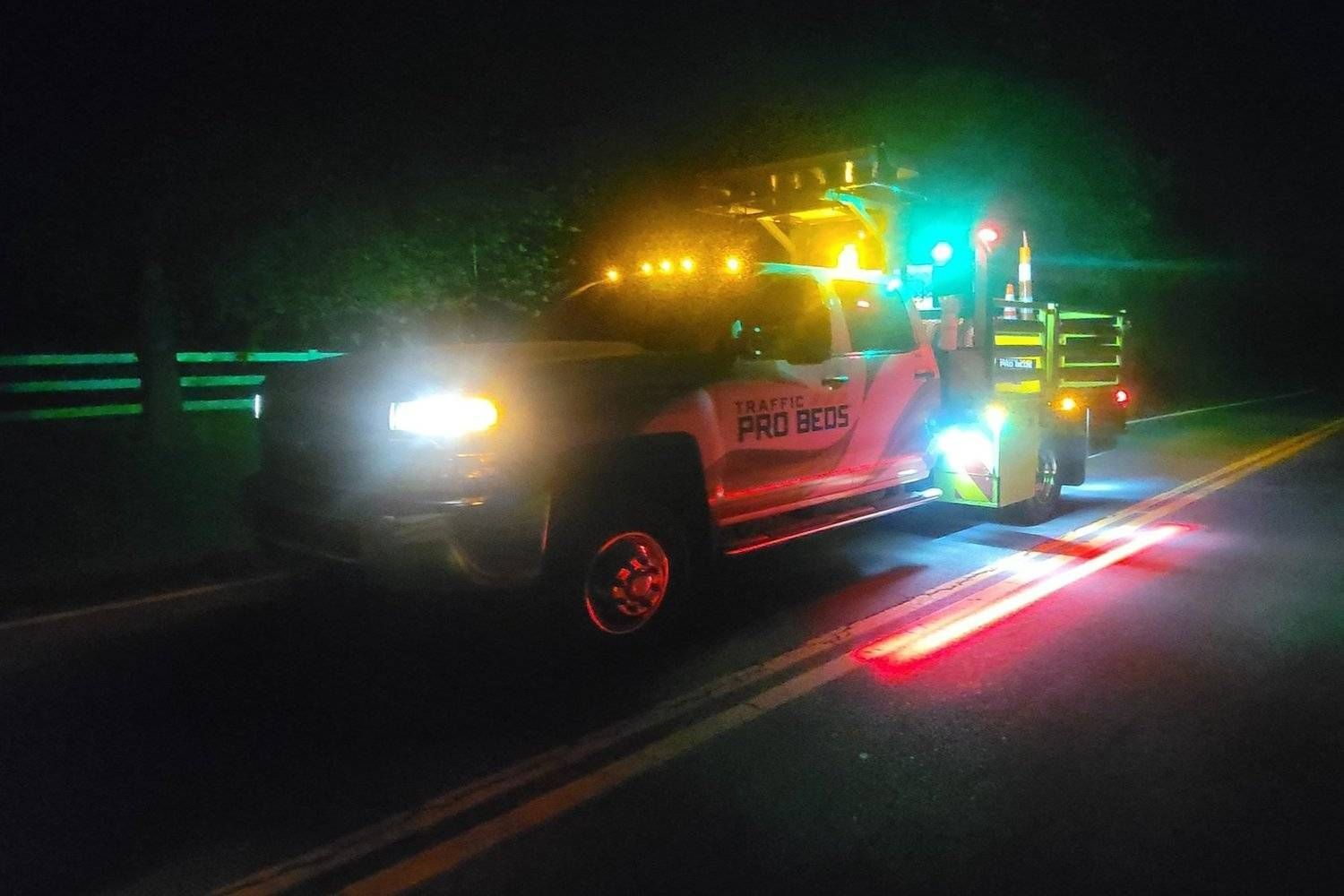
NIOSH recommends measures including horns, audible backup alarms, and flashing lights to alert workers to nearby forklifts. It notes that flashing lights can be particularly important where high ambient noise can make audible warnings harder to recognize.


Visual warning systems can therefore complement audible alarms and traffic-management procedures by providing another type of cue.

Creating More Recognizable Operating Areas

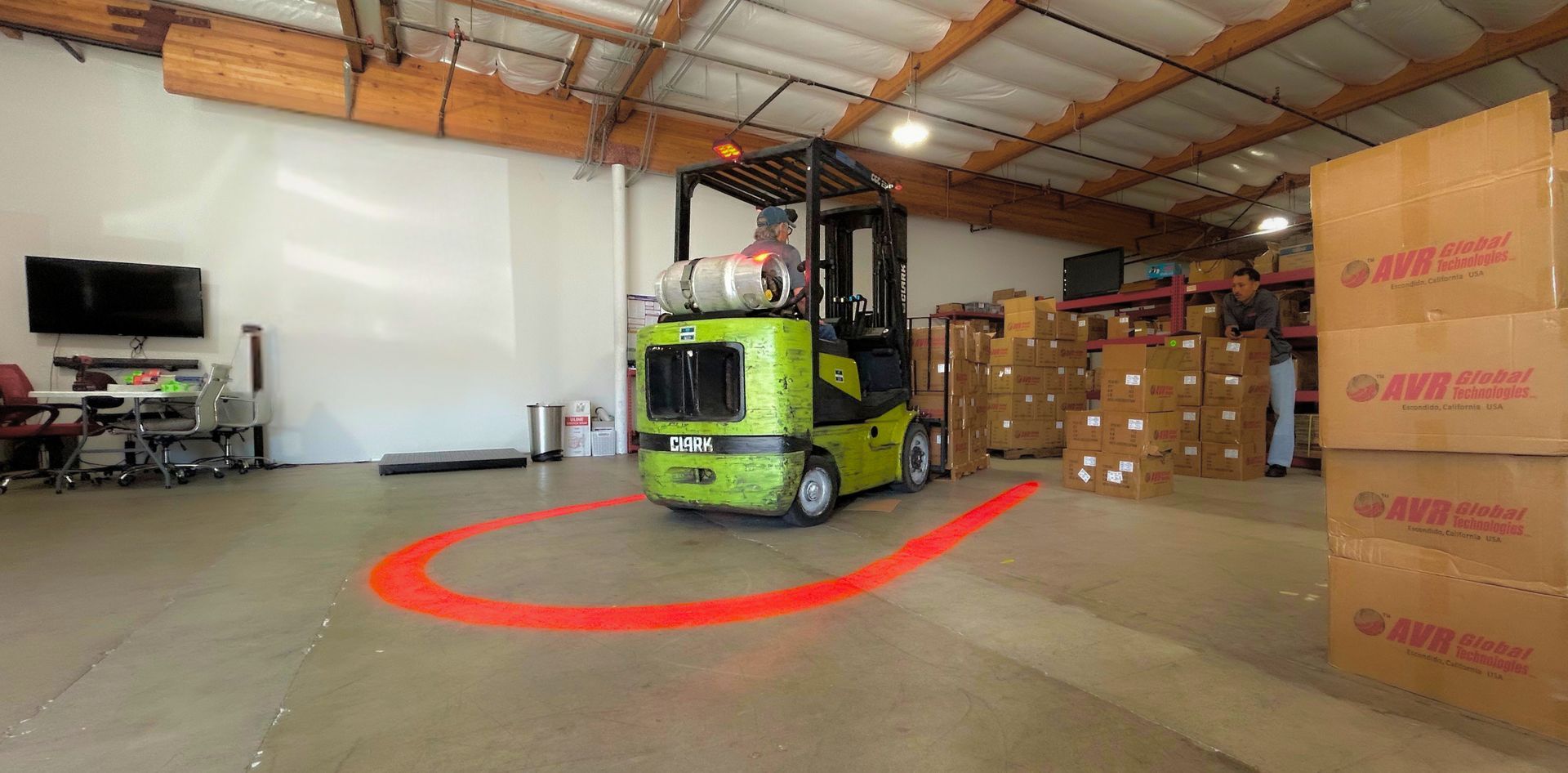
Projected warning lights take the concept a step further by placing a visible indication directly onto the floor.


Depending on the system configuration, a projected line or boundary can provide personnel with a visual reference around the equipment.


This does not create a physical barrier, and workers should never treat a projected line as a substitute for established pedestrian routes, operator communication, or facility safety procedures.


Instead, it can provide an additional visual cue within a layered approach to pedestrian awareness.

Consider the Entire Environment

When evaluating warning lighting for forklifts, safety and fleet managers should consider:

  • Pedestrian travel routes
  • Blind intersections and corners
  • Loading and staging areas
  • Ambient noise
  • Existing warning alarms
  • Floor and ambient lighting conditions
  • Forklift travel direction
  • Equipment dimensions
  • Desired warning area
  • Mounting and electrical requirements


Different facilities may require different approaches. A U-shaped projected boundary may work well for one application, while independently positioned warning lights may provide better coverage for another.

A Supplemental Layer of Awareness

The objective should not be to replace established safety controls with technology.


Instead, visual warning systems can be evaluated alongside pedestrian separation, training, signage, barriers, mirrors, audible warnings, traffic procedures, and other measures appropriate to the facility.


Sources & Further Reading

Occupational Safety and Health Administration — Powered Industrial Trucks: Pedestrian Traffic


National Institute for Occupational Safety and Health — Preventing Injuries and Deaths of Workers Who Operate or Work Near Forklifts


Important: Guardian Glow is a supplemental visual-awareness system and does not replace required training, pedestrian controls, barriers, alarms, PPE, or other applicable safety measures.

Recent Posts

By Rene Lightfoot August 20, 2026
Adding Visual Warning Systems to Existing Equipment
By Rene Lightfoot August 20, 2026
Understanding Blind Areas Around Construction Equipment
By Rene Lightfoot August 20, 2026
Warning Lights & Forklift Safety: What OSHA Guidance Actually Says