Understanding Blind Areas Around Construction Equipment
Large construction equipment can create substantial areas where an operator has limited or no direct visibility.
NIOSH defines blind areas as spaces of limited visibility around construction vehicles and equipment and identifies limited equipment visibility as one factor contributing to struck-by incidents involving workers and construction machinery.
Understanding those areas is an important part of planning safer work around excavators, loaders, dozers, trucks, and other heavy equipment.
Blind Areas Differ by Machine
There is no universal blind zone for heavy equipment.
Machine dimensions, operator position, engine compartments, cabs, attachments, mirrors, and other components can all affect what an operator can see.
NIOSH has developed blind-area diagrams for numerous types of construction equipment, including:
- Backhoe loaders
- Dozers
- Excavators
- Loaders
- Dump trucks
- Rollers
- Scrapers
- Road-construction equipment
The diagrams evaluate visibility at multiple heights around the machine, helping illustrate how equipment geometry affects an operator's field of view.
Why Equipment Visibility Matters
Construction sites frequently place ground personnel near moving machinery.
NIOSH identifies construction vehicles and heavy equipment operating within work zones as an important source of struck-by risk and recommends measures including increasing worker and equipment visibility, using pedestrian walkways, positive barriers, training, and vehicle warning technologies.
No single technology addresses every hazard.
That makes understanding the machine, work zone, traffic flow, and worker location essential when selecting additional warning systems.
Making Operating Areas More Visible
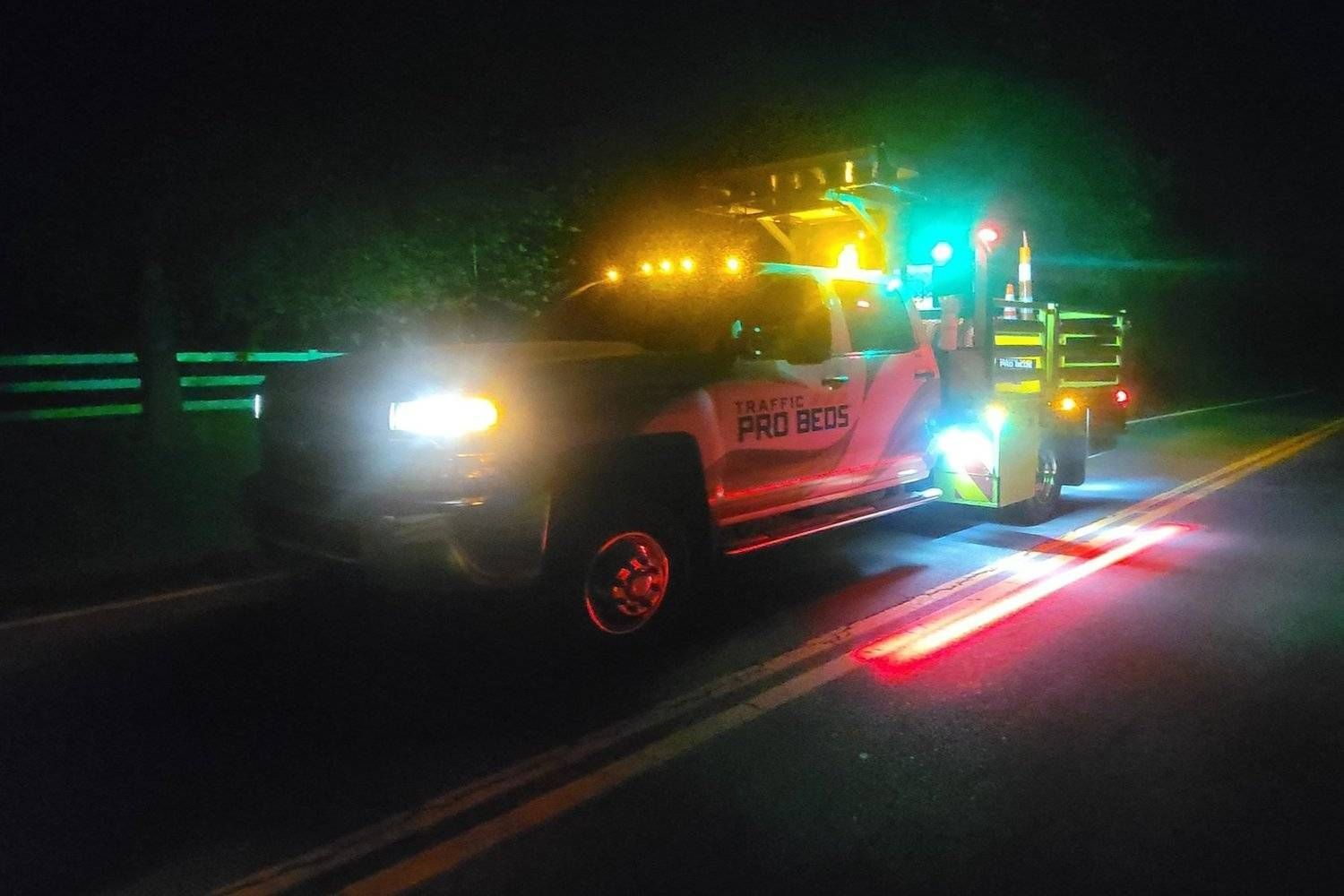
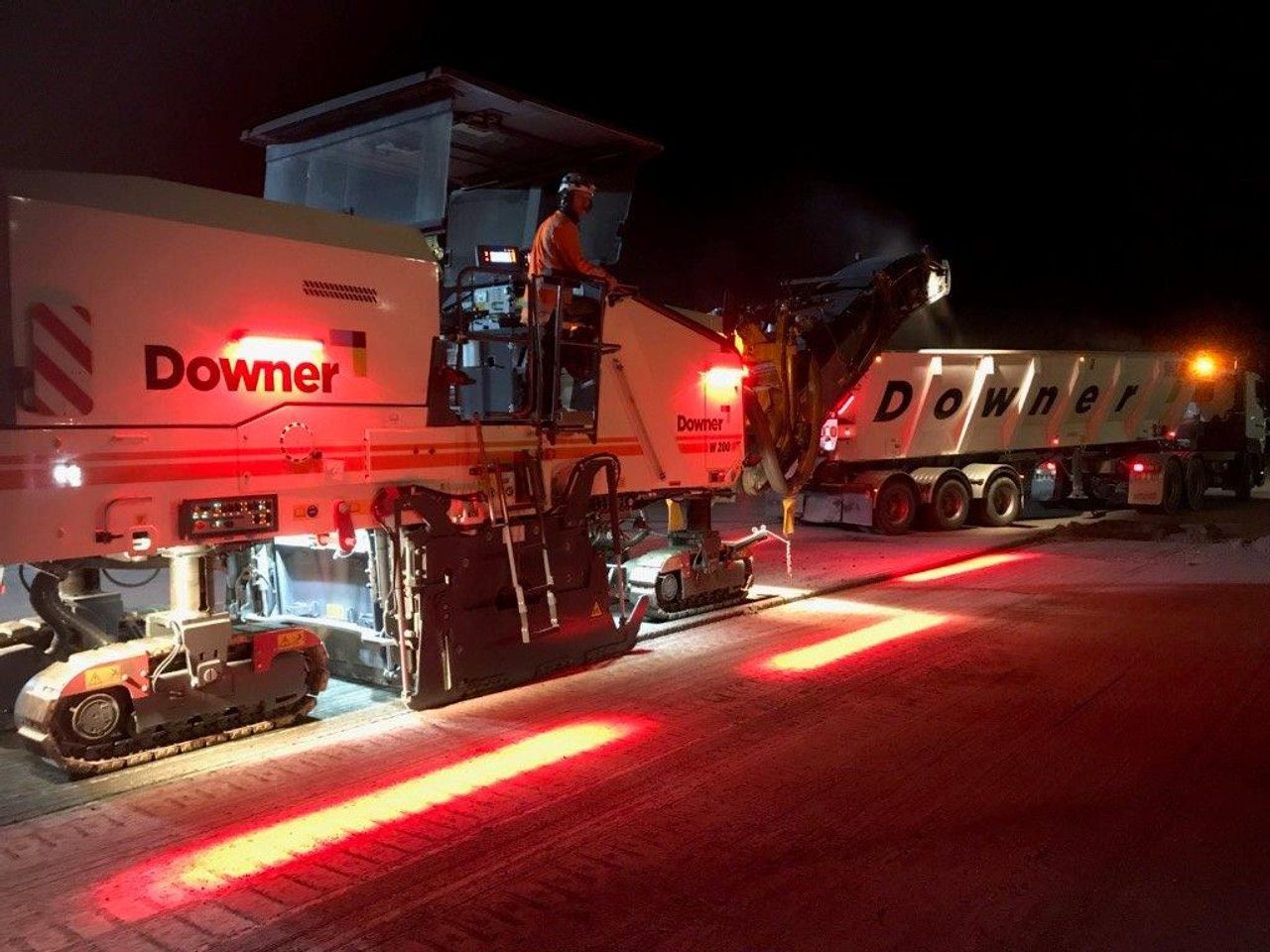
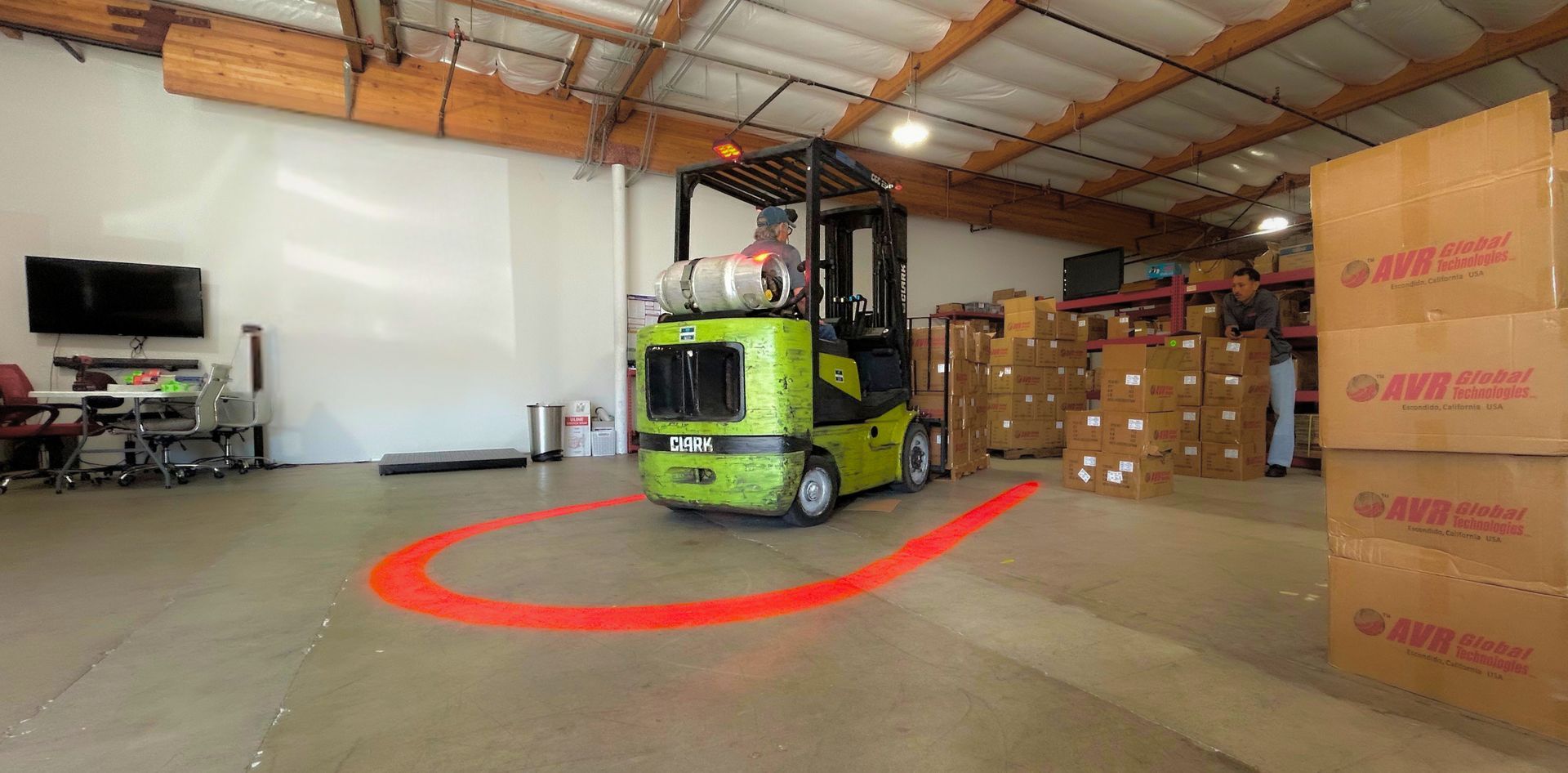
Projected warning lighting can provide an additional visual reference around mobile equipment.
A visible line or perimeter projected onto the ground can help personnel recognize a designated area around a machine, particularly when the equipment itself has substantial blind areas.
The projection should not be interpreted as a physical barrier or guarantee that an operator can see everything inside or outside the illuminated area.
Instead, projected lighting can serve as another visual-awareness tool alongside established site controls.
Sources:
National Institute for Occupational Safety and Health — Construction Equipment Visibility
National Institute for Occupational Safety and Health — Creating Blind Area Diagrams: Manual Method
National Institute for Occupational Safety and Health — Preventing Struck-by Injuries in Construction
Important: Projected warning lighting is a supplemental visual-awareness measure. It does not eliminate equipment blind areas or replace spotters, barriers, traffic-control plans, training, PPE, or other controls required for the application.