Warning Lights & Forklift Safety: What OSHA Guidance Actually Says
Forklift safety involves much more than the equipment operator. In warehouses, manufacturing facilities, distribution centers, and other industrial environments, powered industrial trucks frequently operate in areas shared with pedestrians, creating potential hazards wherever travel paths intersect.
OSHA's Powered Industrial Trucks guidance emphasizes separating forklift traffic from pedestrians where possible. It also instructs operators to slow down, stop, and sound the horn at intersections, corners, and other locations where visibility is obstructed.
Where Warning Lights Fit
Warning devices can provide an additional layer of awareness around mobile equipment. OSHA identifies several warning and safety devices that may be incorporated into powered industrial trucks, including horns, backup alarms, and flashing warning lights.
OSHA's pedestrian-traffic guidance also advises operators to use flashing warning lights or backup alarms when traveling in reverse, when those devices are provided.
These devices should be understood as part of a broader safety strategy—not as replacements for safe operating procedures, operator training, pedestrian controls, or physical separation.
Moving Beyond Traditional Warning Lights
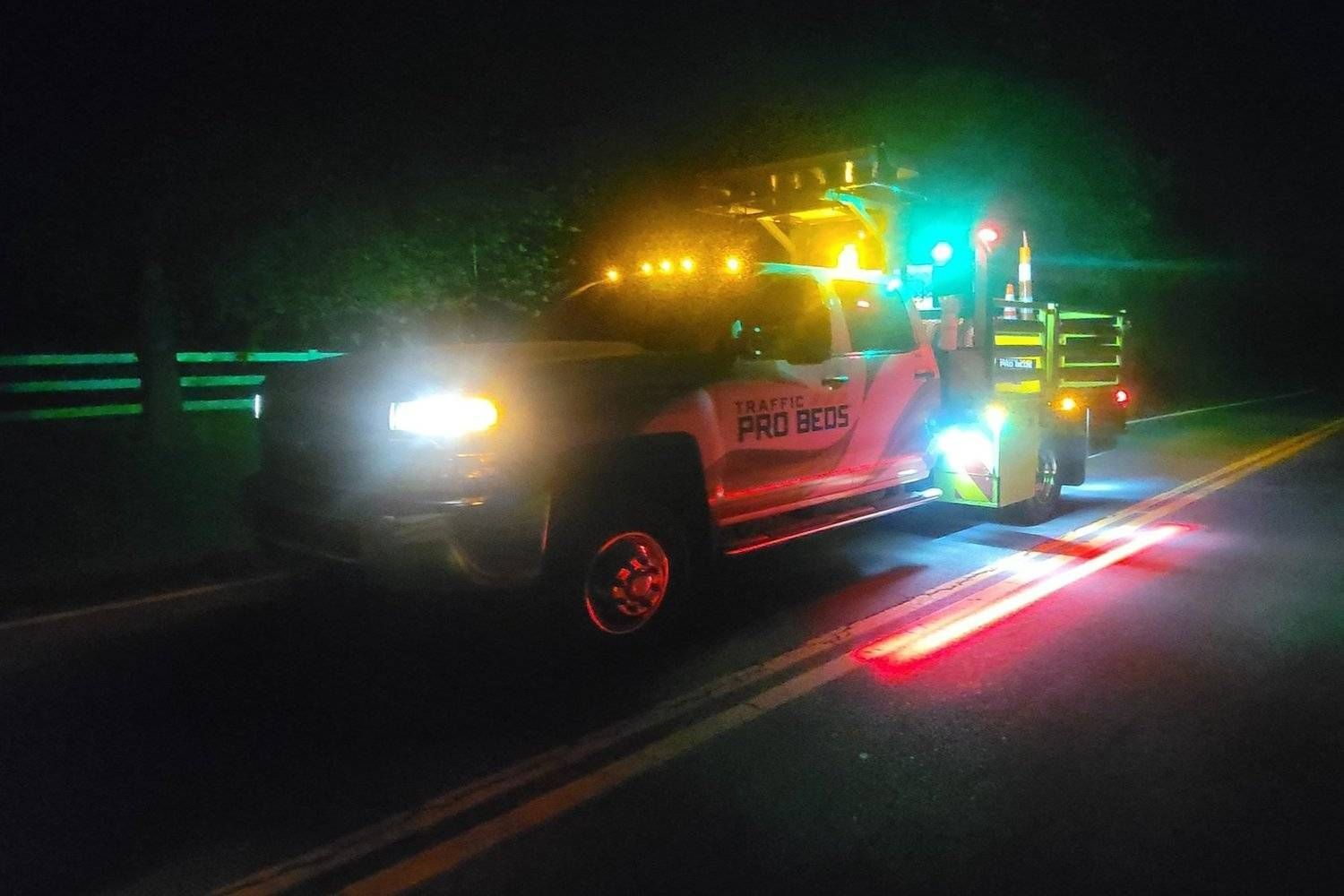
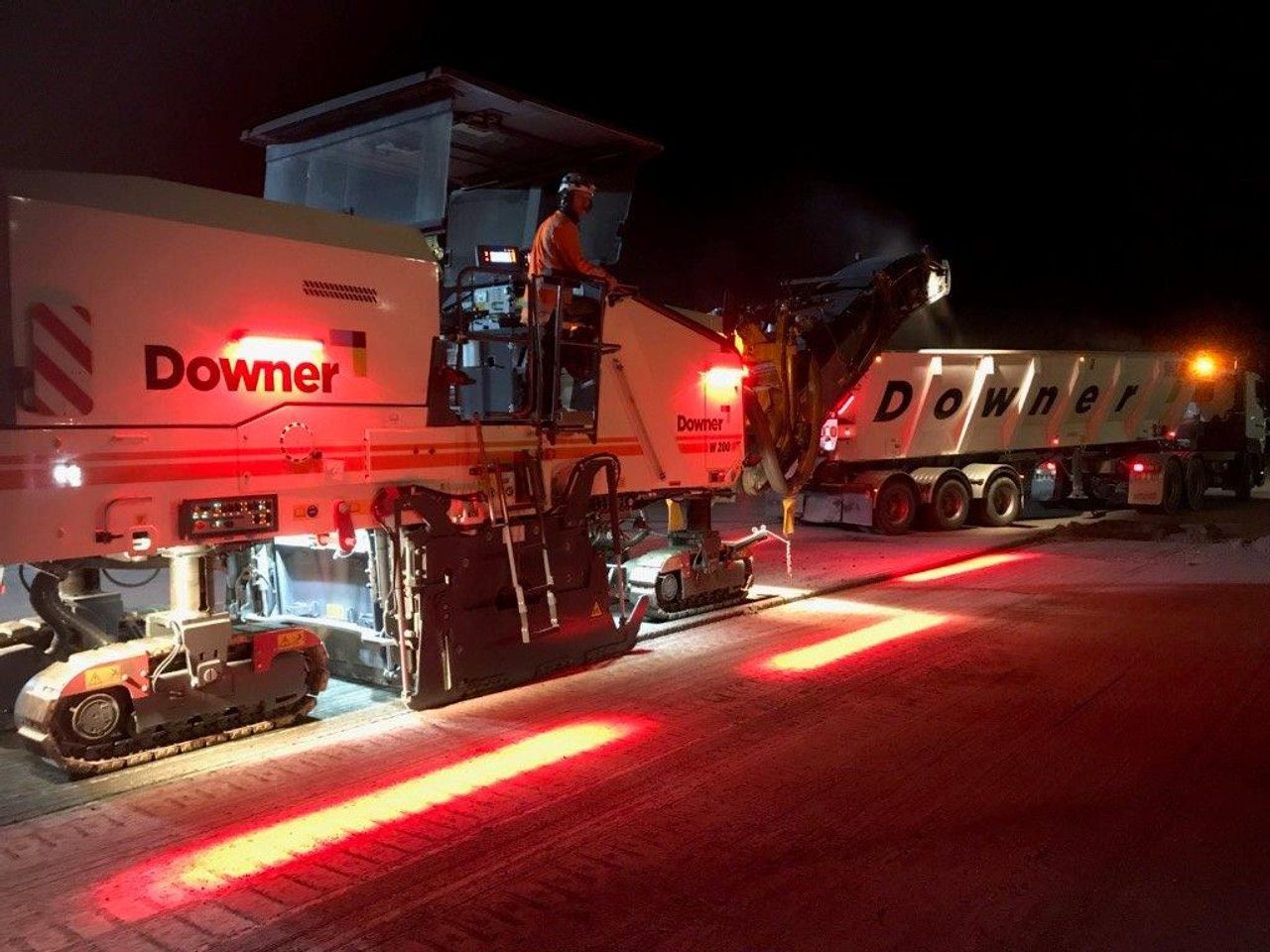
Traditional warning lights typically alert workers to the presence of equipment. Projected visual warning systems provide another option by creating a visible cue on the floor around or near the equipment.
Depending on the configuration, projected lines or boundaries can help nearby personnel visually recognize a designated area around a moving machine.
The appropriate system depends on factors including:
- Equipment type and dimensions
- Pedestrian traffic
- Operator visibility
- Lighting conditions
- Facility layout
- Mounting locations
- Equipment voltage and electrical configuration
Building a Layered Approach
No single warning device eliminates forklift-pedestrian risk.
Facilities should evaluate traffic patterns, blind corners, intersections, pedestrian walkways, equipment visibility, operating procedures, warning devices, and other controls together.
Guardian Glow projected warning lighting can be considered as a supplemental visual-awareness component within that larger safety strategy.
Sources:
Occupational Safety and Health Administration — Powered Industrial Trucks: Pedestrian Traffic
Occupational Safety and Health Administration — Powered Industrial Trucks: Other Safety and Warning Devices
National Institute for Occupational Safety and Health — Preventing Injuries and Deaths of Workers Who Operate or Work Near Forklifts
Important: Guardian Glow is a supplemental visual-awareness system. Product selection and installation should be evaluated for the specific equipment and workplace. Warning lighting does not replace required training, safe operating procedures, physical barriers, alarms, PPE, or other applicable safety controls.